Category: Uncategorised

Fiscal 2024 CEO/CIO Letter

Gordon Fyfe headshot

Prudent asset allocation and stringent liquidity management enabled BCI to perform well amidst ongoing market volatility.

As undercurrents roiled the global economy and capital markets in fiscal 2024, our BCI investment professionals again demonstrated their know-how and resolve by delivering positive returns across most asset classes. The strong showing was due in large part to our teams having already modeled this sort of macroeconomic scenario, buttressing our ability to manage downside risks and capitalize on strategic opportunities stemming from market dislocations. The adverse environment experienced over the past several years has further underscored the benefits of building a well-diversified portfolio focused on high-quality assets, while expanding sources of returns with regard to geographies, asset types and strategies — including private debt, a space BCI entered just five years ago.

A combination of prudent asset allocation and stringent liquidity management with regard to client portfolios enabled BCI to perform well amidst ongoing market volatility. Over the course of fiscal 2024, we added around six months to the liquidity coverage ratio, ending the year with approximately 19 months and still growing. Those robust reserves and sizeable stores of ‘dry powder’ further attest to our effective strategy and risk management frameworks.

Several noteworthy strategic initiatives, including the evolution of our Funding Program and the addition of unsecured debt, continue to be fundamental to strengthening BCI’s liquidity position. This past year saw the issuance of our inaugural debt offering — which was oversubscribed and, accordingly, re-opened just three months later — achieving a total raise of $2.25 billion. The program also received the highest possible long-term credit ratings from leading global agencies: Moody’s (Aaa), S&P (AAA), and DBRS Morningstar (AAA). Those stellar ratings speak to our exceptional investment and operational capabilities.

As regards debt, we have increased our private debt holdings from zero in 2019 to more than $15 billion. The strategy is performing well, and we have experienced no defaults in our internal portfolios. All credit to the team. The rapid growth of this program reflects an economic milieu that has created a challenging environment for borrowers — and interesting opportunities to address the alternative credit needs of non-sponsor, middle-market companies. So, in another first for BCI, we announced an anchor investment in a new venture between Centerbridge Partners and Wells Fargo that focuses on direct lending to North American mid-market companies. It stands to reason that infrastructure debt was also an important focus area for BCI this year as we sought to offer compelling risk-adjusted returns with lower volatility and high-yielding cash flow. This strategy has been in development since 2020, and we expanded our capital deployment in this space over the past year.

PERFORMANCE HIGHLIGHTS

Performance-wise, BCI found itself with a tough act to follow in the wake of the back-to-back, record-breaking value-add results we achieved in fiscal years 2022 and 2023. This year, we returned 7.5 per cent for our combined pension plan clients, compared to the benchmark result of 11.6 per cent. Nevertheless, we outperformed our benchmarks for the five-, 10-, 15- and 20-year periods. Crucially, we also exceeded the actuarial required rate of return our pension clients need to meet their future obligations over these long-term periods, enabling them to remain in surplus positions.

Closer scrutiny of our relative one-year performance confirms that we outperformed benchmarks for all asset classes except real estate equity and private equity, both of which faced difficult market environments. I wish to note as well that, current challenges notwithstanding, we remain confident in our rebalanced real estate portfolio, which mainly comprises warehouses, data centres, and multi-family housing. Over the past eight years, we have reduced our office weighting by nearly half to 19.1 per cent, holding mostly ‘Class A’ buildings with high occupancy rates. With respect to private equity, we should bear in mind that this asset class has been a star performer and was a major contributor to those record value-add results posted for the 2022 and 2023 fiscal years. However, macroeconomic factors impacting private equity markets have slowed deal flow dramatically over the past year and caused valuations to decline. Additionally, private equity is paired with an internal benchmark holding a public equity index which saw explosive growth driven by the so-called ‘Magnificent Seven1’ tech stocks that collectively make up more than 25 per cent of the S&P 500 index. Suffice to say that, given the extenuating circumstances, we anticipated this year’s underperformance by BCI’s private equity holdings.

ESG LEADERSHIP

BCI remains firm in its commitment to manage risk and achieve long-term returns on behalf of our clients. We do this by using environmental, social, and governance (ESG) considerations as an integral part of our investment process. Two major ESG-related milestones were reached in fiscal 2024: surpassing the expected 30 per cent reduction in our public equities weighted average carbon intensity2 (WACI); and exceeding the expected $5-billion cumulative participation in sustainable bonds.

Those milestones were achieved ahead of schedule, and I am proud of our team’s ongoing work to support the global goal of net zero and align our portfolio to a low-carbon future.

CLIENTS FIRST

Our organization continues to evolve along with the needs of our clients and their beneficiaries. Accordingly, our focus on innovation must extend beyond technology into all facets of BCI’s overarching operations, culture and values. Nevertheless, I wish to remind stakeholders that there is one constant: BCI’s tried-and-true corporate values, led by ‘Clients First’, remain the driving force behind our strategic planning and decision-making. BCI regularly conducts comprehensive client satisfaction surveys, and I am pleased to report that we attained an overall satisfaction score of 92 per cent in the 2023 calendar year assessment, up six per cent from 2022. Of course our commitment to client satisfaction is by no means limited to investment performance. Rather it’s a measure of our clients’ overall confidence and trust. So I should note that clients also expressed a high degree of approval in how we have supported them through protracted economic and market upheavals, and broader concerns stemming from ongoing geopolitical tensions.

TALENT MANAGEMENT AND DEVELOPMENT

Employee engagement and retention remain top priorities as we return to a more office-centred workplace model, and reinforce our focus on our shared values and collective culture. Teams now spend four days a week in the office to facilitate better communication, mentoring and collaboration. At the same time, we continue to advance our equity, diversity and inclusion (EDI) strategy and roll out our EDI action plan. This year we have provided employee diversity metrics for gender, race and ethnicity in our report, to underscore our commitment to advancing diversity within BCI and the investment industry at large, in alignment with the International Financial Reporting (IFRS) standards.

We also continue to be actively engaged in our campus recruitment program, aimed at forging lasting connections with post-secondary institutions and building a strong pipeline of diverse up-and-coming talent. New this past year is an Indigenous Empowerment Award Scholarship Program, established in partnership with Vancouver Island University. This program supports the development of young Indigenous investment professionals, two of whom were awarded scholarships this year.

ARTIFICIAL INTELLIGENCE: A POTENTIAL GAME CHANGER

I count myself among the growing legions of people who view artificial intelligence (AI) as arguably the most important technological development of our time, and a true game changer for those of us in the investment business — even as we grapple with the risks and benefits this emerging technology might pose. Across BCI, we are actively exploring the potential of various AI applications to improve the way we do things, evaluating tools that hold the promise for helping to drive innovation, streamline processes, boost productivity and unlock the potential for even greater value-add for clients. Furthermore, AI can provide opportunities to redirect precious human resources, freeing team members from monotonous tasks to take on more interesting challenges. Properly handled, I believe there is potential for everyone to emerge as a winner from AI.

COMPLIANCE MONITORING

On a related front, BCI has also launched a new automated compliance system for employee preclearance and disclosures, an imperative for organizations such as ours. Replacing manual processes for preclearing employee trades and monitoring employee compliance is crucial to ensuring we adhere to regulatory guidelines and execute these processes efficiently.

BUSINESS PLAN TRANSITION

This past fiscal year-end saw the completion of BCI’s three-year business plan. Accordingly, in collaboration with the Board of Directors, management spent time this year developing a new business plan to take effect in fiscal 2025. This new plan focuses on three underlying strategic ambitions: Driving Sustainable Growth, Accelerating Innovation, and Operating on a Global Scale.

OPERATING ON A GLOBAL SCALE

We are already well on the way to realizing that latter ambition: our New York and London offices have proven successful in numerous respects, facilitating the hiring and retention of world-class talent and bringing a global perspective that augments BCI’s access to investment opportunities and risk management. I should also note that our presence in Mumbai, India, has proven instrumental in opening doors for BCI on the subcontinent and in neighbouring ASEAN markets. Establishing offices abroad is not without logistical and cultural challenges. However, we are confident that any obstacles we encounter can be successfully overcome by drawing on BCI’s trademark ingenuity and teamwork.

MORE TWISTS AND TURNS AHEAD FOR GLOBAL MARKETS

Looking ahead, we anticipate ongoing near-term market volatility, which means our investment strategy & risk team will be kept busy modeling various scenarios and pathways. Given that inflation and interest rates remain high in certain key economies, we continue to closely monitor recession indicators as well as several worrisome geopolitical conflicts that pose a threat to global stability through the risk of contagion.

Be that as it may, we remain focused on clients’ long- term goals and regard the near-term volatility as both a challenge and an opportunity to support value creation in our investments. It’s all about continuing to find innovative solutions to deliver risk-adjusted returns for our clients’ portfolios, no matter the market conditions.

As I have previously observed, relationships are at the heart of what we do. Active investing is anchored in the quality and strength of the relationships between partners. BCI’s global growth brings us closer to where many of our partners and investment opportunities are to be found. At the same time, stakeholders can rest assured that we will remain grounded in our underlying purpose: providing world-class investment management services to British Columbia’s public sector.

On that note, I wish to acknowledge and thank our clients for the ongoing trust they place in us as their asset manager; the BCI Board of Directors for their diligence and engagement in our governance; as well as my colleagues in senior management and the entire BCI team for their unstinting efforts and commitment to the realization of our goals.

Gordon F. Fyfe
Chief Executive Officer/Chief Investment Officer

 
1 The Magnificent Seven consists of U.S. technology stocks: Alphabet (GOOGL), Amazon.com (AMZN), Apple (AAPL), Meta Platforms (META), Microsoft (MSFT), Nvidia (NVDA), and Tesla (TSLA).
2 Calculated using the weighted average carbon intensity methodology.


Sustainable Bonds: Investing in Real-World Outcomes

Solar panels and wind turbines with sunset in the background


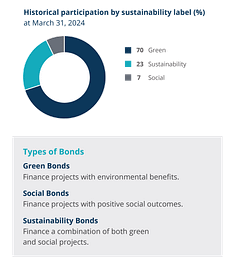
BCI looks for opportunities to invest in the fast-growing market of sustainable bonds. These use-of-proceeds bonds — labelled green, social, or sustainability — offer clients investment returns and exposure to positive sustainability outcomes, including climate mitigation strategies. Through primary market participation, our investments support leading issuers in directing funds toward tangible environmental and social solutions.

Overachieving our estimated $5 billion cumulative participation by 2025, BCI’s total historical participation in sustainable bonds reached more than $5.23 billion as of March 31, 2024. We’ve supported a total of 63 issuing entities through 113 new issues since 2013 and invested in 21 new issuances valued at just over $1 billion in this fiscal year alone.

Anne-Marie Gagnon, Director of ESG, sits on the board of the Canadian Bond Investors’ Association (CBIA) and chairs the CBIA’s ESG Committee. BCI is also a member of the International Capital Market Association (ICMA) Green and Social Bond Principles, currently its only Canadian investor member. We promote the ICMA Green and Social Bond Principles to support market growth, encouraging qualified issuers to consider sustainable bonds as a financing mechanism within their sustainability strategies.

Engaging on Standards
Critical to improving the product offering for bond investors, we continue to engage underwriting banks and issuers to align with investors’ interests and expectations for improved transparency and rigour in accounting and reporting on sustainable finance targets. In addition, we actively support engagements and hold regular dialogue with market participants involved in the structuring and marketing of sustainable and labelled bonds.

BCI is a member of the ICMA Sustainability-Linked Bond (SLB) Working Group, and of the Sustainability-Linked Loans (SLL) Refinancing Instruments Taskforce. Sustainability-linked bonds and loans have general purpose use of proceeds with financial or structural components tied to achieving ESG targets. We disagree with the systematic characterization of sustainability-linked financing as sustainable finance by the underwriting community. BCI is a member of these efforts to ensure investors’ views are expressed and considered. We advocate to significantly strengthen the instruments’ shortcomings including the ambition of targets and the materiality of penalties associated with missed targets to deliver their intended purpose of incentivizing companies to achieve sustainability targets.

“Our engagement with bank dealers and issuing companies on sustainable bonds shows how the invest and influence pillars of our ESG strategy intersect. Influencing the behaviour of market participants gives us better options to invest in attractive opportunities, while actively investing gives us a stronger voice at the table.”
– Anne-Marie Gagnon, Director, ESG

Participation Across Issuers and Industries
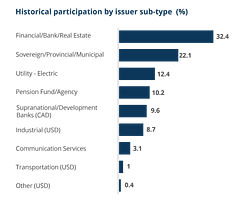
BCI participates in the sustainable bond market by investing in a diverse universe of issuers, including sovereign, supranational and agency (SSA) issuers — such as all level of government organizations and development banks— and corporate investment grade and high-yield issuers.

Canadian-dollar-denominated SSA bonds represent over 40 per cent of our total historical participation, with issuances by development banks representing under 10 per cent, and Canadian governments and agencies such as Public Sector Entities reflecting over 30 per cent of total historical participation. Examples from our fiscal year, ending March 31, 2024, include:

  • $450 million invested in green and social bonds from Canadian federal, provincial, and municipal governments.
  • $100 million invested in social and sustainability bonds issued by development banks.


Canadian-dollar-denominated corporate issuances represent over 30 per cent of our historical participation. Examples from this fiscal year include:

  • $125 million+ invested in Canadian utilities issuing green and sustainability bonds.
  • $100 million+ invested in Canadian real estate and financial institutions issuing green and sustainability bonds.

U.S. corporate issuance represents over 25 per cent of our historical participation, including about 15 per cent from financial institutions and just under 10 per cent from industrials. This fiscal year, we observed reduced supply in the US market, especially from banks compared to previous years. Investment examples from this fiscal year include:

  • $40 million+ invested in industrial companies’ green bonds.

Use of Proceeds

Historically, BCI has subscribed to 113 sustainable bonds, representing over $5.23 billion in initial participation in support of 63 issuing entities1. Some examples of our 2023-2024 investments are included in the table below.

Type Region Issuer Issuer Type Issuance Value Year Use of Proceeds
Green Canada Government of Canada Federal Government $4 billion 2024 The Government of Canada’s second green bond used to finance programs including incentives for the Zero Emissions Vehicles Program, the Smart Renewables and Electrification Pathways Program and the Low Carbon Economy Fund.
The first sovereign green bond to include nuclear energy as an eligible expenditure, with a maximum of 10% earmarked to this category.
Sustainability Canada Fédération des caisses Desjardins du Québec Corporate $500 million 2023 Green: Finance renewable energy, green buildings, and clean transportation.

Social: Finance affordable housing and employment generation including through SME financing and microfinance.

Green U.S. (for Europe-based issuer) ZF North America Capital (for ZF Friedrichshafen AG) Corporate US$600 million
US$600 million
2023
2023
Finance clean transportation, renewable energy, pollution prevention & control, and energy efficiency. Furthering ZF’s mission to electrify passenger cars and commercial vehicles. The company has set a 2030 emission reduction target validated by the Science Based Targets initiative.
Sustainability & Green Canada Hydro One Corporate $450 million (sustainability)
$425 million (green)
$400 million (green)
$550 million (green)
$250 million (reopening; sustainability)
2023
2023
2023
2024
2024
Green: Finance clean energy and energy efficiency projects to achieve the organization’s emission reduction targets.

Social: Socio-economic advancement of Indigenous peoples in line with the issuer’s Indigenous relations and procurement programs.

Green Canada Toronto-Dominion Bank Corporate $500 million
US$500 million
2014
2023
Finance renewable energy, energy efficiency, clean transportation, and green buildings.
Our support of financial institutions’ green bond programs carries multiplier decarbonization effects such as through the banks’ lending activities on client companies.
Green U.S. Verizon Communications Corporate US$1 billion
US$1 billion
US$1 billion
2021
2022
2024
Finance renewable energy purchase agreements across five U.S. states covering nearly 900MW of new renewable energy generating capacity – 53% from solar and 47% from wind.

Verizon is one of the largest green bond issuers in the US.

Green International (Europe) (for U.S. based issuer) Alcoa Nederland Holding (for Alcoa Corporation) Corporate US$750 million 2024 Finance circular economy, pollution prevention & control, renewable energy and water and wastewater management.

The Transition Pathway Initiative recognizes Alcoa’s short- and long-term decarbonization strategies as aligned with a 1.5-degree scenario.

1At March 31, 2024

Escalating Engagement: Methane Disclosure

Methane pipes and valves

Last updated October 22, 2024

As a long-term investor, BCI believes in engagement and advocacy over divestment in high-emitting sectors such as oil and gas. We prefer to address long-term and persistent ESG risks like climate change through constructive dialogue with company management and boards, as well as regulators and standard setters. This includes encouraging companies to adopt targets aligned to the Paris Agreement and improve climate-related disclosure and performance.

Aligned to our Climate Action Plan, BCI has increased our focus on methane emissions and use of strategic escalation where we see limited progress following engagement.

Increasing our Focus on Methane Disclosure
Methane has a far greater warming potential than carbon dioxide, contributing 28 times more on a 100-year timescale and 84 times more on a 20-year timescale, and the portion of emissions attributable to human activities is responsible for at least a quarter of today’s global warming. According to the International Energy Agency, addressing methane is one of the fastest, most cost-effective means of limiting global warming in the near term. This means companies are also facing heightened regulatory risk and pressure from consumers to act.

While natural gas is positioned to play a role in the energy transition over the short to medium term in certain jurisdictions, the accuracy of methane reporting remains a source of uncertainty and potential risk. Despite voluntary disclosures, methane is recognized to be significantly underreported because of insufficient detection and overly simplistic accounting assumptions. To make informed investment decisions and manage risk within the portfolio, long-term investors need companies to align to leading methodologies for methane disclosure and seek third-party verification through reasonable assurance.

Calling for Alignment with the Oil & Gas Methane Partnership 2.0
We encourage companies to align with the Oil & Gas Methane Partnership 2.0 (OGMP) – the flagship oil and gas reporting and mitigation program of the United Nations Environment Programme and the highest standard in methane measurement, reporting, and target setting. Its comprehensive framework allows investors to track and compare progress and performance across companies, and strengthens the effectiveness of abatement activities. This is particularly important as scrutiny on methane will increase as new technologies evolve such as satellites capable of detecting methane. Furthermore, enhanced measurement and management aids operational safety and efficiency such as monetizing a waste product that could otherwise add value to the oil and gas value chain.

The OGMP’s membership includes 130 companies with assets in more than 70 countries, representing nearly 40 per cent of the world’s oil and gas production, over 80 per cent of liquified natural gas flows, and nearly 25 per cent of global natural gas transmission and distribution pipelines. While the initiative has grown significantly in recent years to include many major U.S. oil and gas companies and global national oil companies, there is currently only one Canadian member company, emphasizing the need for further engagement.

“Commitment to and implementation of OGMP provides investors with assurance that portfolio companies are responsibly managing and urgently mitigating their methane emissions towards near-zero levels.”
Anne-Marie Gagnon, Director, ESG at BCI.

To enhance our efforts, BCI joined a collaborative engagement led by Nordea Asset Management to urge more oil and gas and utilities companies to join the OGMP and reduce methane emissions to near-zero levels. In 2023, nine of its focus companies joined the OGMP and the initiative received the Environmental Finance Award for Pollution Reduction Initiative of The Year (Global). The collaborative engagement also recently received the 2024 Recognition for Action – Climate Award from the Principles for Responsible Investment for its leadership on methane reduction and disclosure.

Case Study: TC Energy
BCI has been engaging individually with TC Energy, a Canadian energy infrastructure and pipeline company, on strengthening its methane disclosure.

After almost two years, we escalated our engagement by filing a shareholder proposal seeking reasonable assurance on TC Energy’s climate-related emissions metrics, including methane in its natural gas business unit, ahead of the company’s 2024 annual shareholder meeting. We also requested that TC Energy adopt the OGMP’s methodology for measurement and reporting as a basis for reasonable assurance on the methane metrics.

In response to our engagement and filing, TC Energy committed to publish a roadmap to reasonable assurance and reassess its membership in the OGMP by July 2025. Based on this progress, we agreed to withdraw the proposal prior to the annual meeting. BCI will continue our engagement with the company as it delivers on these commitments.

Contributing to a Stronger Regulatory and Policy Environment
As a global investor, BCI actively responds to public policy consultations and advocates for ambitious action to address oil and gas methane emissions at the regulatory level. For example:

Overall, BCI supports the proposed regulations and ECCC’s efforts to adopt cost-effective rules for its methane reduction target of at least 75 per cent by 2030. We also support extending the regulations for the exploration and production sub-industry to storage, processing, transportation and transmission facilities in Canada’s onshore oil and gas sector.

Learn more about our approach to climate action.

Tackling ESG Risks and Opportunities at the Portfolio Level

Closeup of stock market board in city at nighttime

Examining investments at the total portfolio and client portfolio levels allows us to identify broad ESG trends that could have financial or reputational impacts.

We use our proprietary ESG Risk and Opportunity Framework to analyze, measure, and report on ESG opportunities and risks across portfolios, including climate change scenarios. This work helps us make more informed decisions and supports resilient portfolios focused on the long term. It also increases the likelihood of achieving our clients’ financial objectives.

We developed the framework over a number of years, and continuously improve it by updating financial models, estimation methods, and methodologies.

The Framework
BCI’s ESG Risk and Opportunity Framework is designed to support analysis at a total fund, client, asset class, portfolio, sub-industry, and individual asset levels. It consists of five modules:

  • Materiality: identifying relevant material systemic risks for the total portfolio.
  • Scenarios: developing and updating scenarios for each material systemic risk.
  • Sensitivity tool: quantifying the financial impact of systemic risks on every sub-industry.
  • Risk quantification: quantifying the potential financial risk impacts to the portfolio over time.
  • Dashboards: reporting and distributing data and results for each investment decision.

By testing the sensitivity of industries and portfolio holdings, BCI can identify, evaluate, and target areas of opportunity and risk.

Climate Scenarios
The framework’s climate scenario analysis and modelling capabilities allow BCI to evaluate multiple possible future outcomes using standard financial and risk modelling techniques and approaches. The scenarios are updated and refined as new data and estimation methodologies from reputable sources become available, such as the International Energy Agency (IEA) and the Network for Greening the Financial System (NGFS).

We analyze historic and current asset exposures using long-term expected climate change impacts under different climate scenarios, including 1.5°C, 2°C, and 3°C. The framework is used to stress test total portfolio and asset-specific impacts under these scenarios.

Using the Results
We use the framework for client asset-liability reviews and to analyze material transition and physical climate risk during deal due diligence reviews. For clients, the framework shows the vulnerabilities of different strategic asset allocations. For due diligence on potential new investments, where material, BCI evaluates transition and physical climate risks and opportunities. This allows BCI to identify risks, potential risk mitigation strategies, or identify new opportunities at the investment, asset class, and total portfolio levels. For asset classes and portfolio managers, this analysis provides a better understanding of the resiliency of certain types of investments to climate change and other uncertainties.

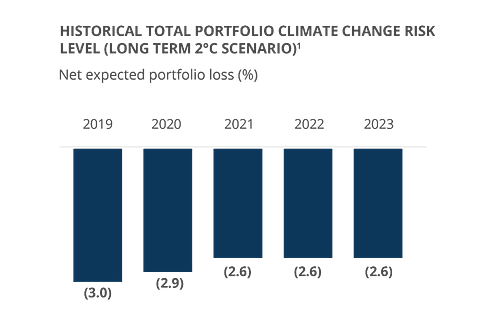
Between 2018 and 2020, asset allocation decisions, informed by climate change scenario analysis, decreased the climate risk level for the portfolio and increased the potential for transition opportunities. Climate risk in the portfolio has remained relatively stable since 2020, and we expect the actions in our Climate Action Plan will continue to reduce this risk level going forward.

Our ESG team continues to monitor emerging trends like societal and labour risks, biodiversity risks, and increasing cyber security risks that have potential implications for our global portfolio.


1The results represent the measurement of the portfolio climate risk that could materialize by 2050 under a 2°C scenario relative to a 3°C scenario. The 2023 results are not directly comparable to prior years due to incorporation of new datasets from the NGFS and extending the analysis date from 2040 to 2050. Using the prior year reported data and approach, portfolio climate risk levels in 2023 were roughly unchanged relative to 2022 risk levels.

Evan Greenfield: ESG as a Source of Value Creation

BCI’s private equity program manages a diverse portfolio comprising $30.7 billion in directs, co-investments, and funds. By actively engaging with our portfolio companies to identify material ESG risks and opportunities that drive economic value, we can achieve tangible outcomes that have the potential to result in higher risk-adjusted returns for our clients as our portfolio companies become more resilient, sustainable, and better positioned in their respective markets.

Evan Greenfield, Managing Director, ESG, shares how BCI’s private equity team actively creates value for our clients through ESG performance improvements.

BCI leverages ESG as a source of value creation across our portfolio. How is this accomplished in the private equity program?
EG: Our embedded ESG experts work closely with the private equity investment teams to integrate ESG considerations across the investment timeline, from due diligence to exit. We tailor our approach for each portfolio company and aim to identify and address material risks, unlock new growth opportunities, and improve operational efficiency.

We have developed an engagement-based ESG framework unique to private equity that helps us to create clear links between initiatives and quantify financial outcomes. It is designed to understand company-specific risk factors and opportunities, inform strategy, and create economic value during three main phases:

  1. Investment Due Diligence: At the outset, BCI evaluates material ESG risks based on the company’s industry and identifies mitigation pathways such as purchase price adjustments or post-investment reduction strategies. Value creation opportunities are also identified at this stage but the primary focus is on understanding ESG risk.
  2. Post-Investment Close: While always working to identify and mitigate ESG risks, early in the investment period BCI looks to leverage ESG as a core part of company strategy. In some cases, this includes engaging with management to create products and solutions related to sustainability and the energy transition.
  3. Investment Exit: Over the life of the investment, BCI supports our portfolio companies in demonstrating and sharing the tangible outcomes and value created by their ESG initiatives and tying this to financial outcomes. By leveraging ESG as a differentiation factor and competitive advantage, BCI aims to achieve higher exit valuations for portfolio companies.

Can you share a recent example of BCI’s work with portfolio companies?
EG: We engaged extensively with five portfolio companies, representing $1.6 billion in net asset value, over the past year to establish and quantify ESG-related initiatives. Through this work, we have identified numerous opportunities for value creation, and are working to execute on ESG related initiatives that we believe can unlock hundreds of millions in value for our portfolio.

One example is our engagement with PS Logistics, a leading flatbed truck transportation and logistics provider in the U.S. Collaborating with management, we quantified the financial benefit attributable to their ’driver-first’ culture. Management’s focus on prioritizing drivers has led to distinct financial benefits such as reduced insurance premium costs, avoidance of costs in recruiting and training new drivers, lower energy costs through route optimization, and greater market share from clients who are focused on sustainability in their supply chain.

Does the private equity team’s ESG approach extend to our general partners?
EG: Over the past year, we engaged more than 50 per cent of our fund portfolio general partners, based on assets under management, on ESG and climate-related opportunities to align expectations, exchange expertise, and enhance performance. This included conducting deep-dive educational sessions to showcase leading practices in ESG integration.

We also encourage our general partners to participate in the ESG Data Convergence Initiative (EDCI) – a global initiative that compiles private company ESG data using a standard set of metrics established by investors.

BCI returns 7.5% and surpasses $250 billion in gross assets for fiscal 2024

Curved bridge over water

Public equities and private debt were top contributors to absolute performance

VICTORIA, BC – June 27, 2024 – British Columbia Investment Management Corporation (BCI) today announced an annual combined pension plan return1 of 7.5 per cent. The combined pension plan return represents the performance of BCI’s six largest pension clients by assets under management (AUM).

Gross AUM2 grew from $233.0 billion last year to $250.4 billion for the fiscal year ended March 31, 2024, a year-over-year increase of $17.4 billion or 7.5 per cent. Net AUM totalled $229.5 billion, with investment gains contributing $16.5 billion net of all fees to this AUM growth.

“We delivered solid absolute results even through challenged markets this year,” said Gordon J. Fyfe, BCI’s Chief Executive Officer and Chief Investment Officer. “This was not a coincidence. Rather, it speaks to our team’s diligent risk approach and prudent liquidity management, which provided us with resilience and capability to capture market dislocations and deploy capital. Our investment teams continue to build a diversified portfolio, emphasizing direct and unique deals around the globe.”

All asset classes generated positive returns apart from real estate equity, where sustained market headwinds affected valuations. Liquidity management was a key focus, including $1.25 billion in capital raised from BCI’s inaugural bond issuance, with an additional $1 billion raised in the subsequent reopening of the same series. Asset classes focused on rebalancing across strategies to pursue opportunities in a muted deal environment. More than 10 direct deals were executed, further diversifying BCI’s portfolio with entry into new sectors and geographies complementing our strong Canadian footprint. Opportunities in infrastructure debt increased, and three transactions were closed, increasing European exposure. Private debt deployments were substantial at US$2 billion, focusing on differentiated opportunities in the middle and lower middle markets and expanding the program to Asia. Within the infrastructure & renewable resources and private equity programs, an increasing focus on asset management boosted portfolio valuations and created $17.6 billion in value over five years and returned $31.1 billion in cash distributions to clients.

Long term, BCI continues to deliver consistent annualized results, returning 7.5 per cent over a five-year period, representing a cumulative value add3 of $2.2 billion. As a result, BCI’s combined pension clients, with investment horizons extending many years, maintain a healthy position with funding ratios ranging from 103 to 133 per cent.

“Generating consistent long-term performance is imperative for our clients as they require greater cash flows for their obligations as pension plans mature,” added Fyfe. “Looking at our annualized 10-year return, for our combined pension plan clients, we outperformed the benchmark by 0.7 per cent, representing $8.3 billion of value add, consistently exceeding our clients’ nominal and real actuarial discount rates.”

“Our one-year relative performance lagged the benchmark this fiscal. This was no surprise as the exponential growth of the ‘Magnificent Seven’ tech stocks resulted in a very strong combined pension plan benchmark hurdle. We build portfolios that provide clients with the risk-adjusted returns they require over the long term, and that’s where we will continue to focus on adding value.”

RETURN SUMMARY FOR THE COMBINED PENSION PLAN CLIENTS

HIGHLIGHTS
Corporate

  • Expanded our total employees to 770, growing the global team year-over-year by 8.3 per cent, including 34 professionals in the London and New York offices, strengthening our physical presence in these financial centres.
  • Moved to fully embed ESG into corporate reporting, including alignment with the IFRS Sustainability Disclosure Standards, and began development of an internal ESG data platform.

Public Markets

  • Exceeded $5 billion in cumulative participation in sustainable bonds.
  • Launched an unsecured debt program with an inaugural $1.25 billion senior unsecured 10-year bond offering, and a subsequent $1 billion reopening of the same series, with the highest possible long-
    term credit ratings.
  • Acted as an anchor investor in Overland Advantage, a direct lending platform established by Centerbridge Partners in partnership with Wells Fargo, which will also yield co-investment opportunities.
  • Executed $2.7 billion of deployments in Absolute Return Strategies, which delivered strong one-year performance exceeding 12 per cent.
  • Deployed net US$2.0 billion for the Principal Credit Fund and achieved the strongest one-year performance since the fund launched with a 13.3 per cent annual return for fiscal 2024.

Private Markets

  • Concluded the take-private of Costa Group, Australia’s largest produce supplier of fresh fruit and vegetables.
  • Closed on three infrastructure debt investments, increasing capital deployment in high-conviction sectors that benefit from decarbonization and digitization in the U.S. and Europe.
  • Committed US$300 million to Cube Highways Trust, the largest road platform in India consisting of 18 toll and annuity assets and made a separate commitment to the Cube Highways growth platform, CH5, which targets further investments in India’s transportation sector.
  • Closed an investment in A2 Motorway, a leading European public-private partnership motorway.
  • Participated in an additional financing round for British Columbia-based Photonic Inc., a quantum computing company, positioning BCI as one of their largest shareholders.
  • Committed a total of $2.9 billion to the private equity program, including $2.2 billion to fund investments, reinforcing strategic relations with existing managers, and allocated the remaining $700 million to private equity direct investments, including additional investment to support the growth of our existing companies.
  • Deployed $3.3 billion in the real estate equity program to high conviction and growth sectors such as data centres, student housing, residential, and industrial globally.
  • Committed $3.2 billion in real estate debt investments, including Verve, an off-campus student housing and apartment, and a cold storage distribution facility.

The 2023-2024 Corporate Annual Report is available at BCI.ca.

All figures are in Canadian dollars unless otherwise stated.

ABOUT BCI
British Columbia Investment Management Corporation (BCI) is amongst the largest institutional investors in Canada, with C$250.4 billion in gross AUM as of March 31, 2024. Based in Victoria, British Columbia, with offices in Vancouver, New York, and London, U.K., BCI manages a portfolio of diversified public and private market investments on behalf of its 29 British Columbia public sector clients.

With a global outlook, BCI integrates ESG factors into investment decisions and activities that convert savings into productive capital to meet clients’ risk and return requirements over time. Founded in 1999, BCI is a statutory corporation created by the Public Sector Pension Plans Act. For more information, visit BCI.ca or LinkedIn.

CONTACT
Olga Petrycki
media@bci.ca


Except as otherwise indicated, returns are time-weighted rates of return (TWRR) as at March 31, 2024. All returns are net of all costs and fees. Investments are reported by the program within the asset classes as set out in the clients' Statement of Investment Policies & Procedures (SIPP). Benchmarks represent a weighted combination of multiple indices specified in the clients' SIPP. The indices may vary over time.


1 The combined pension plan clients reflect the investments of BCI's six largest pension clients: BC Hydro Pension Plan, College Pension Plan, Municipal Pension Plan, Public Service Pension Plan, Teachers' Pension Plan, and WorkSafeBC Pension Plan.
2 Gross assets under management exclude market values for The Funding Program, which are clients’ investment liabilities achieved through government bond repurchase agreements and unsecured bond issuance.
3 Cumulative value-add is the additional dollar return that BCI generated for clients in excess of client benchmarks through active investments, excluding the impact of the centralized currency management program after all costs and fees.
4 The Funding Program includes clients’ investment liabilities achieved through government bond repurchase agreements and unsecured bond issuance.

Escalating Engagement: Board Diversity

4 chairs around empty boardroom table

BCI recognizes the value of diverse boards for better decision-making and long-term performance.

We have long advocated for at least 30 per cent female representation and encourage companies to set diversity targets for both boards and executive management. Since 2016, BCI has been a member of the 30% Club Canada, which aims to achieve a minimum level of 30 per cent of women on boards in Canada.

We use a range of tactics to pursue our board and management diversity objectives. These include proxy voting, direct engagement, policy advocacy, collaborative engagement, and strategic escalation when we see no sign of progress over time.

As chair of the 30% Club Canada Investor Group, BCI and fellow investors determined that U.S. broadband company Charter Communications Inc. lagged its peers with only one woman on the board, well below our expectations of at least 30 per cent representation.

Case Study: Charter Communications
BCI has consistently voted against the chair of Charter Communications’ nominating committee due to inadequate gender diversity at the board level. In 2023, BCI collaborated with U.K. and European members of the 30% Club to engage Charter Communications on the board’s 8 per cent female representation.

After sending an initial letter, the group escalated our action. We filed a shareholder proposal late in 2023 for consideration at the company’s 2024 annual general meeting, seeking commitments to improve diversity through a board gender diversity policy and transparent director recruitment processes. BCI was the lead filer; our co-filers were Brunel Pension Partnership, Nest Corp, and UBS Asset Management.

As lead filer, BCI met with the company to discuss our proposal. In early 2024, Charter Communications nominated a new female director with relevant experience to replace an outgoing male director and reaffirmed its dedication to considering gender and other forms of diversity in ongoing recruitment efforts. In light of the progress, and on the condition that a description of the engagement would be added to the company’s proxy circular, we agreed to withdraw the proposal prior to the annual meeting.

“BCI’s preference is always constructive dialogue and, in this case, the combination of progress and openness to engage warranted the withdrawal. This proves that engagement can get results. We do not see the matter as closed, and look forward to further discussions with the company.”
Jennifer Coulson, Senior Managing Director and Global Head, ESG at BCI

Additional Action on Diversity
Other facets of our engagement approach include contributing to policy and regulatory discussions and voting our shares according to our proxy voting guidelines.

  • Policy: We have submitted proposals to Canadian regulatory bodies for years, advocating for ambitious yet attainable targets for female representation on boards. In September 2023, we endorsed the CSA’s initiative to augment diversity disclosure for Canadian companies and provided our views on the disclosure options presented.
  • Voting: We expect boards to adopt and disclose a formal diversity policy that includes targets and timelines to increase diversity at both the board and senior management level. Our proxy voting guidelines are reviewed and updated regularly. In 2022, we broadened our approach beyond gender diversity to encompass racial and ethnic diversity of directors, starting with the U.S. and expanding to Canada the next year. In 2023, BCI voted against 46 directors at 34 companies for lack of ethnic and racial diversity.

Learn more about our approach to engagement.

Investing in First Nations-led Projects Across Canada

Silhouette of construction site against multicoloured sunrise sky

BCI has long supported the First Nations Finance Authority’s (FNFA) financing programs, having invested in its debentures since 2014 and commercial paper since 2021.

The FNFA was created in 2005 by First Nations Chiefs and councillors to establish borrowing capacity for member First Nations and provide loans for Indigenous social and economic projects, including infrastructure, rental housing, business ownership, and power projects.

BCI has long contributed to supporting market access for FNFA and its members. Through 10 primary market offerings, we’ve invested $150 million in the FNFA bond program and are one of the largest supporters of its short-term commercial paper program.

“These investments provide our clients with reliable returns, as well as exposure to positive social outcomes like infrastructure projects and job creation. We are proud to support access to affordable financing for First Nations governments and their community members.”
Chris Weitzel, Senior Managing Director, Fixed Income & Foreign Exchange at BCI

The FNFA’s Impact
As a not-for-profit organization, FNFA provides First Nations governments with low-rate loans, as well as investment management services and capital planning advice for the social and economic benefit of community members.
Proceeds of FNFA’s 11th debenture, which helped to create just under 600 jobs, were used to support projects including:

  • Renewable energy such as equity ownership in a wind farm in Ontario and a hydro project in British Columbia.
  • Access to basic infrastructure such as road and internet in Manitoba.
  • Access to essential services such school construction in Alberta.
  • Affordable housing in Saskatchewan.
  • Employment generation through small and medium sized enterprise financing in support of the fisheries, forestry, hospitality and other sectors across the country.

The FNFA has a current loan portfolio of over $2 billion in support of First Nations-led projects across Canada, having historically supported the creation of over 22,500 jobs. British Columbia has the largest number of FNFA members and community loans in place.

With an A+ credit rating from S&P and Aa3 from Moody’s, FNFA offers fixed-income opportunities that deliver predictable returns for BCI and its clients, while allowing First Nations borrowing members to obtain financing on terms that are similar to those of Canadian municipalities.

BCI Private Equity Expands New York Office Footprint

After opening its doors less than two years ago, BCI’s private equity group has doubled the size of its New York office to 20,000 square feet. The expanded office will be home to more than 50 private equity team members as well as those from other growing asset classes across BCI, including public markets.

“Our larger footprint in New York comes at an opportune time for the private equity program, as we continue to grow our portfolio and thoughtfully scale our investment and operations teams, while increasing our focus on value creation,” said Jim Pittman, Executive Vice President & Global Head, Private Equity. “We have a laser focus on deploying capital into direct and strategic investments and look forward to reinforcing key relationships with existing partners, as well as building new ones, in New York and around the globe.”

BCI’s New York office opened its doors in 2022 to welcome its first team outside of Canada and Jim Pittman, BCI’s Executive Vice President & Global Head of Private Equity, relocated to New York in late 2023 to lead a team of more than 70 investment professionals in New York and Victoria B.C., BCI’s headquarters.

Scaling up in New York enables the team to allocate capital directly and optimally manage its existing investments through strengthened value creation activities. More than 50 per cent of BCI’s private equity portfolio is held in the U.S., investing in sectors including business services, consumer, financial services, healthcare, industrials, and technology, media & telecommunications.

Learn more about BCI’s diverse private equity portfolio, comprising nearly $30 billion in directs, co-investments, and funds.

Evaluating External Partners and Managers’ ESG Practices

Blurred image of handshake

BCI selectively engages external partners and managers, where appropriate, to create value for our clients by increasing access to opportunities. We evaluate every external firm’s ESG practices before allocating or increasing capital to its funds.

Our in-house, proprietary ESG External Manager Framework was established in 2020 to provide consistency and coordination for how we assess external firms across all asset classes. We updated the framework in 2023 to ensure it stays relevant to our investment strategies and reflects how ESG integration and stewardship practices are evolving.

The framework provides clear definitions and guidelines, covers holistic ESG matters such as equity, diversity, and inclusion (EDI) at the management firm, and collects information that improves reporting and practices at BCI.

The Framework
Our framework has multiple dimensions. We assess the extent of ESG integration into the firm’s investment processes, the resources and tools provided to staff, and whether the firm’s ESG stewardship practices are aligned with BCI’s corporate engagement priorities. This can include the firm’s formal ESG policies, who is accountable and who oversees ESG matters, and concrete examples of how ESG risks and opportunities are evaluated and considered. We also pay attention to the firm’s internal EDI policies and commitments.

We conclude by categorizing our external manager and partners’ ESG practices into one of the following groups:

  • Immaterial: ESG may not be applicable to some managers due to very short holding periods, the type of asset they hold, or strategy they pursue.
  • Developing: managers that recently launched an ESG program, and are building resources and processes.
  • Committing: managers with established policies and procedures, dedicated ESG resources, and internal training.
  • Advancing: managers or strategies seeking positive outcomes in pre-identified ESG themes, such as clean energy.

Using the Results
In fiscal 2024, we conducted 23 reviews using the updated framework, reflecting all new external partners and managers, to ensure our standards extend beyond our in-house activities. Following the assessment, we selectively engage with our external partners and managers to promote continued improvement over time and may make specific requests for improvements.

For example, BCI’s Managing Director, ESG dedicated to private equity engaged with more than 50 per cent of our private equity fund portfolio general partners, based on assets under management, in fiscal 2024 on ESG and climate-related opportunities to align expectations, exchange expertise, and enhance performance. Key highlights include organizing educational sessions and assisting our general partners in adopting our industry-leading ESG frameworks and engagement practices, with an emphasis on financial linkages.